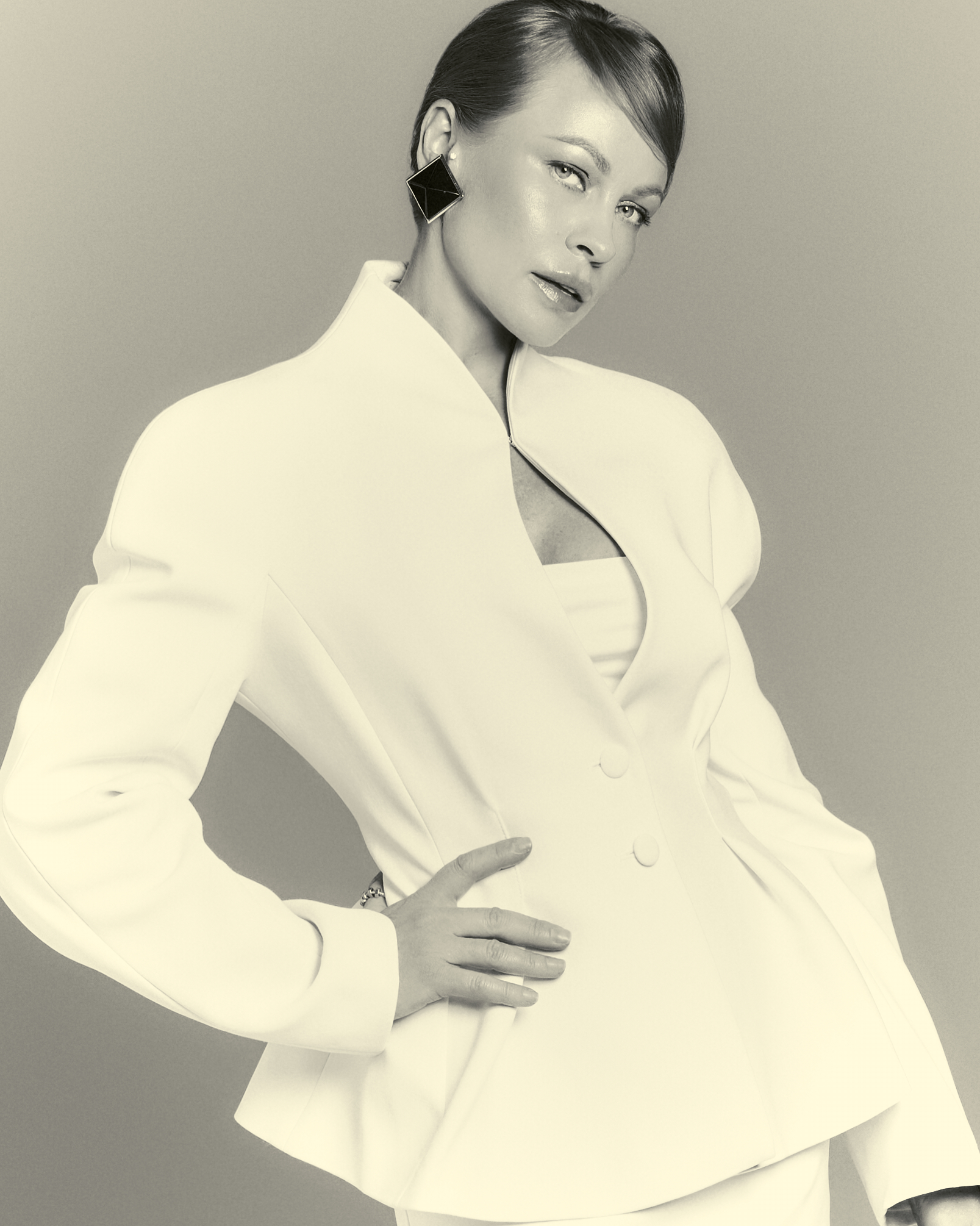
Katerina Sparkish is a rare figure in the industry — someone who combines a high-intensity modeling career with an authorial voice capable of taking the conversation far beyond “the trend of the season.” Her path began on European sets — Milan, London, Barcelona — and continued in New York, from Rimmel London campaigns to beauty projects for Kylie Cosmetics, Makeup by Mario, Armani Beauty, NARS, and Too Faced.
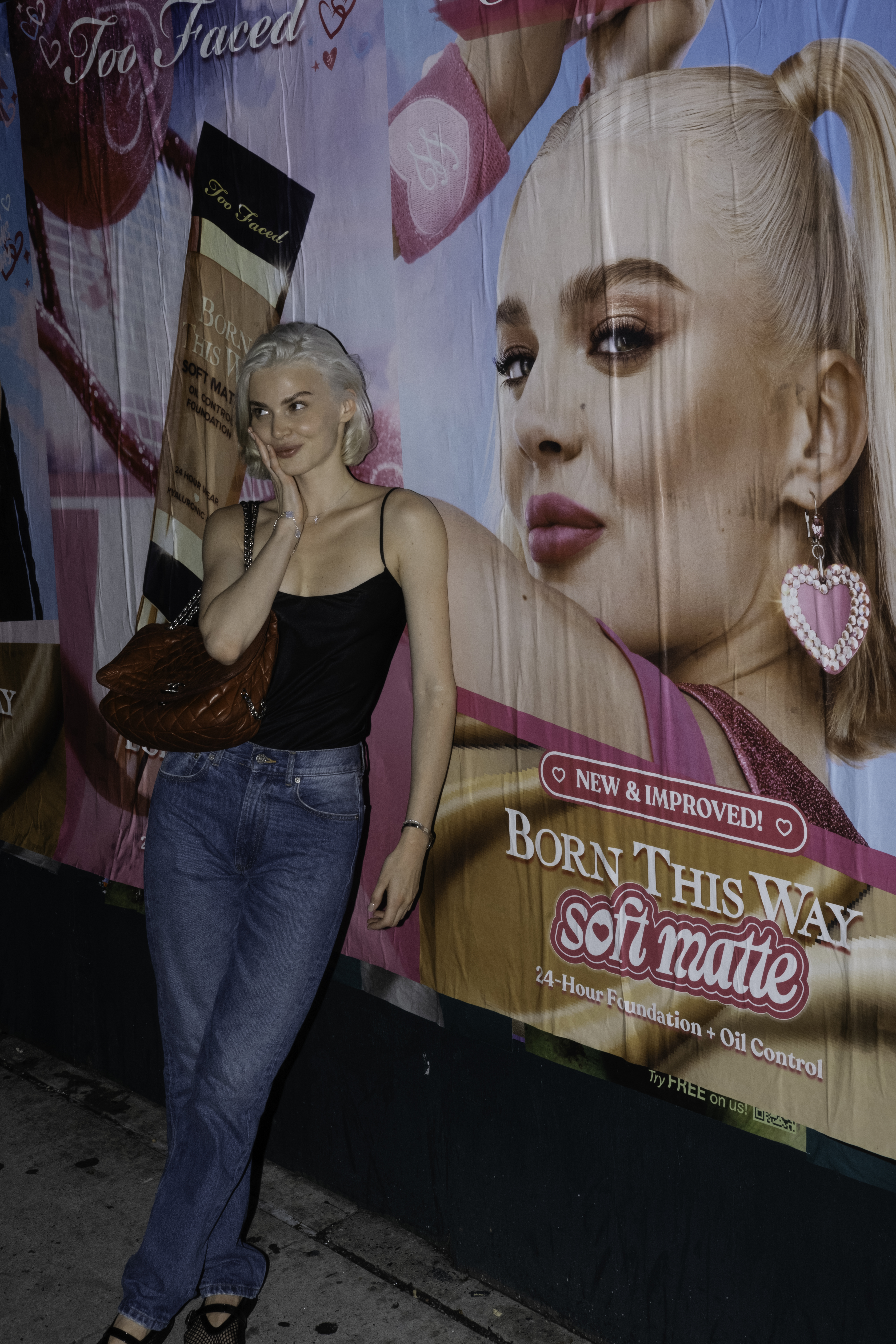
Today, her face appears on Times Square billboards, while her essays and videos merge aesthetics with thought, self-irony with seriousness. We met to discuss what it means to look and to think at the same time — and why, today, this is no longer a privilege but a necessity.
Origins and meaning: how did the European “school” shape you — as a professional and as a person?
You spent years working in Milan, London, and Barcelona — environments defined by speed, discipline, and stamina. Which shoots or people shaped you most during those early years — not as portfolio lines, but as experiences you still carry into your work and life?
Katerina:
Every shoot is a small exam — for patience, for the ability to switch on instantly, for staying composed in chaos. Europe taught me precision and reliability: Zara, Diesel, Bershka, Urban Outfitters — that rhythm requires immediate reaction and professional humility.
But I also met people who shifted my perception of the craft: a photographer who shot only one frame every forty minutes and demanded emotional depth; a stylist who taught me to see a look as a character, not an outfit.
Those years taught me that fashion is both a craft and a collective act of creativity. Most importantly, they taught me discipline without losing curiosity.
Reaching a “new level”: when did brand visibility become public responsibility?
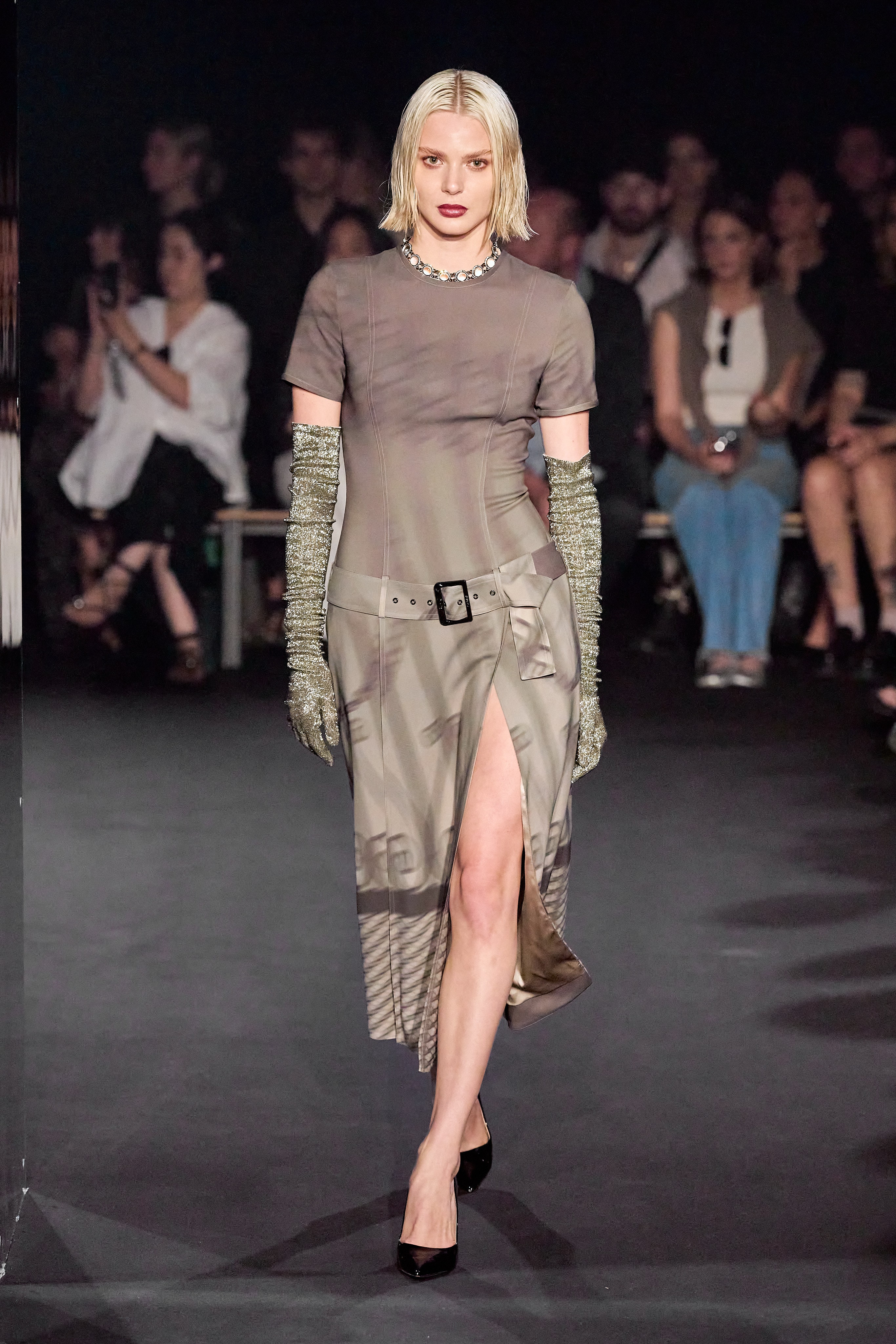
Your Rimmel London campaign in New York was a turning point. When your face becomes not just a visual tool but a voice — how does your sense of your own role change?
Katerina:
At first, it was puzzling — “People interpret my image differently… what do I do with that?” When you join a campaign with a major brand and realize they expect not just poses but ideas, your work softens into something more collaborative.
Working with teams like Makeup by Mario or Armani Beauty becomes less about execution and more about co-creating an aesthetic.
That’s when responsibility appears — thinking about tone, context, and what meanings your appearance carries. It doesn’t feel heavy; it feels structuring. I’ve become more selective — choosing projects not only for compensation but for the cultural mark they leave.
Collaboration and value: what separates commerce from cultural contribution?
You’ve said you value projects with ideas. How do you now distinguish work “for the sake of work” from projects that might enter the industry’s visual history?

Katerina:
Commerce and culture often overlap, but the true criterion is simple: does the project leave emotional and aesthetic memory behind?
If a shoot is just pretty pictures that will be forgotten tomorrow — that’s functional. But when a campaign shapes a visual language — a palette, a mood, a new way of presenting beauty — the industry begins to echo it, turning it into a trend.
My work with Jackson Wiederhoeft is such an example: it’s not just clothing, it’s a micro-performance with its own narrative. That becomes part of history.
For me, the value of a project is in its conceptual depth and in how many new questions it invites.
Signature in the frame: how did you turn imagery into personal thought?
Your photos often feel like short stories. How did your visual language emerge, and how do you “speak” aesthetically and intellectually within a single frame?
Katerina:
I always chase the “unconstructed moment.” I need the frame to breathe — like a scene in a play. My visual language is built from constant work with tone: light, micro-movement, gaze, context — each functions like a phrase.
I learned from directors, makeup artists, philosophers, even economists — strange mix, but it gives depth.
In my blog, text becomes a continuation of the image: a single short reflection under a photo can change its entire meaning.
For me, signature is not a logo but a position: aesthetics plus reflection.
Audience and honesty: how do you preserve intimacy in a public space?
Your audience has grown rapidly, yet you maintain a tone of personal conversation. How do you manage that technically and emotionally?
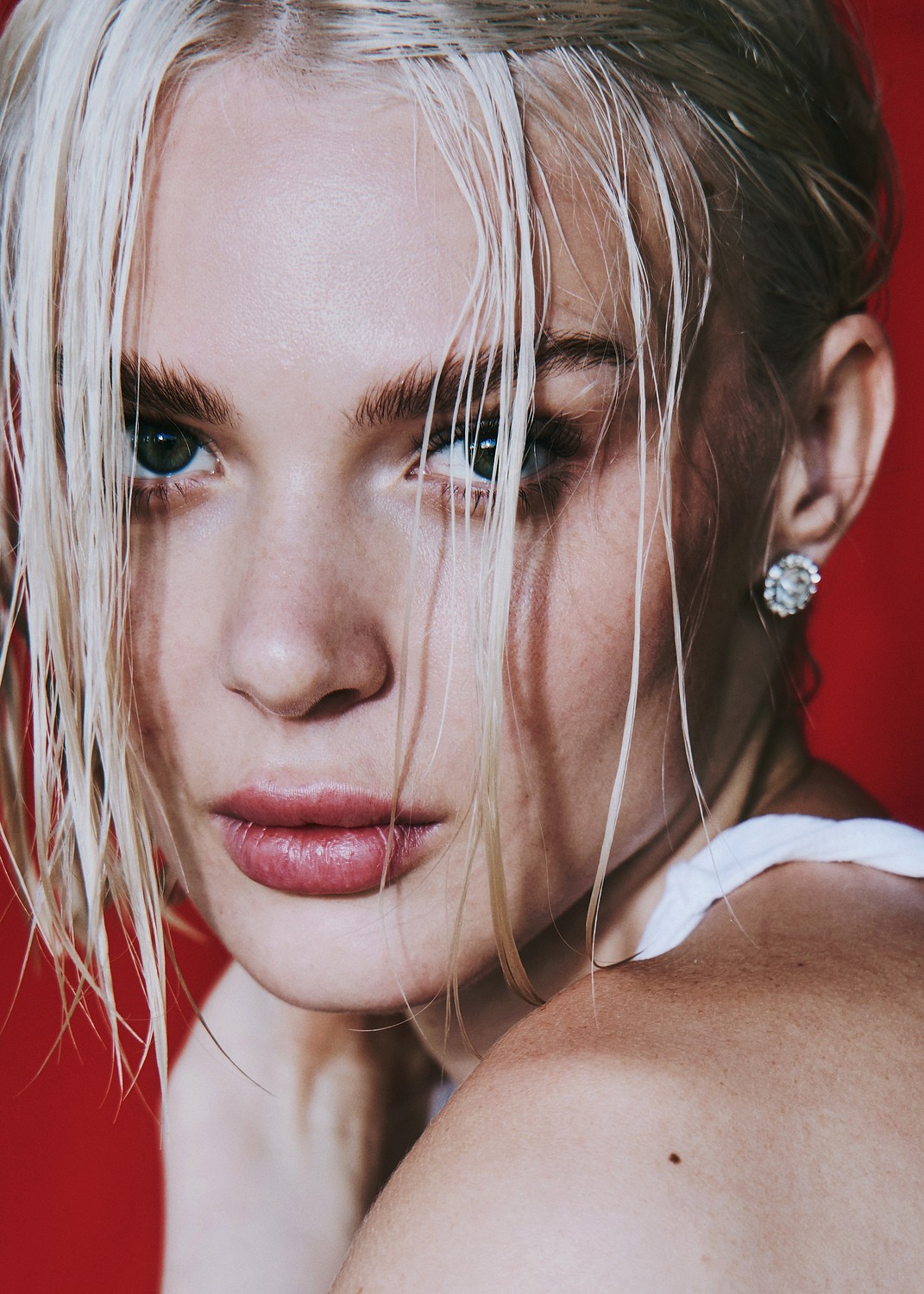
Katerina:
Technically — disciplined, curated content. I don’t post every thought. Emotionally — boundaries: I share what has meaning and resonates with my inner state.
Algorithms love volume, but sustainable trust is built on quality, not frequency.
I respond to messages, read comments, and sometimes write long posts about concepts that matter to me — this creates real dialogue. People don’t want only the image; they want to feel the human behind it.
That’s the goal — accessible, but thoughtful.
Voice as mission: what does “having a voice” mean to you in fashion and media?
Katerina:
A voice is a combination of position and tone. It’s the ability to ask a question that intersects fashion, culture, and identity.
I don’t claim absolute truth — but I care about shaping dialogue: about values, perception, respect for the craft.
Responsibility lies in refusing superficial slogans and resisting the pressure of quick, empty trends. Fashion is a powerful tool for shaping taste and meaning; having a voice means using that tool with intelligence and care.
Recognition and success: how do you measure your career internally?
Billboards and magazines are external markers. But what is your inner barometer of success?
Katerina:
External achievements matter, but the main criterion is growth and impact. Success is when a project changes me as a professional, when a viewer writes that a post made them think differently, when a colleague seeks advice.
Satisfaction doesn’t come from the cover — it comes from the feeling that the work generated new curiosity, new ambition.
If my work inspires someone to read, to reflect, to take a brave step — that is success.
Future and ambition: where do you want your career to go?
Katerina:
I have several plans of different scales. With brands — I want to collaborate with those who shape the language of fashion, not just follow it.
With content — I’m drawn to formats that combine visuals and long-form thought: documentary mini-series, video essays, collaborations with artists and philosophers.
One of my dreams is to create a space where fashion becomes a way to talk about culture, not just a product. And mentorship: supporting young models and creators so the industry doesn’t lose its human dimension.
Culture, politics, aesthetics: how do you decide when to enter public discourse?

Katerina:
I avoid empty political statements — context matters. If the topic concerns ethics, production truth, or real cultural impact, I speak. If it’s a two-day hype cycle, I prefer to observe.
My rule is simple: before speaking, ask — will this add depth or replace it with rhetoric? I choose depth.
Resilience and creative energy: how do you sustain yourself in such a demanding industry?
Katerina:
Curiosity and rituals. I read — philosophy, history, modern essays — that’s where ideas come from. Physically, sports and body care restore energy. Creatively — travel and collaboration: working with new people lets me see the familiar differently.
And the ability to “switch off.” Social media is a tool, not a place to live. Balance is the real work.
Katerina Sparkish is not just a successful professional — she represents the democratization of beauty: the moment when the face and the voice merge, and aesthetics become a reason to think.
Her career shows that the modern model is not merely a vehicle of visual communication but a mediator of meaning, capable of transforming cultural codes.
For a visual-talent dossier, this is a story not only of achievement but of maturity — the art of being visible and honest at the same time.